
Examination without removing the lesion
Dermatoscopy involves examining the skin and does not involve cutting it or removing a mole. The possible procedure is a separate stage.
Dermatology · Lubliniec
Assessment of moles and other skin lesions during a visit to a dermatologist.
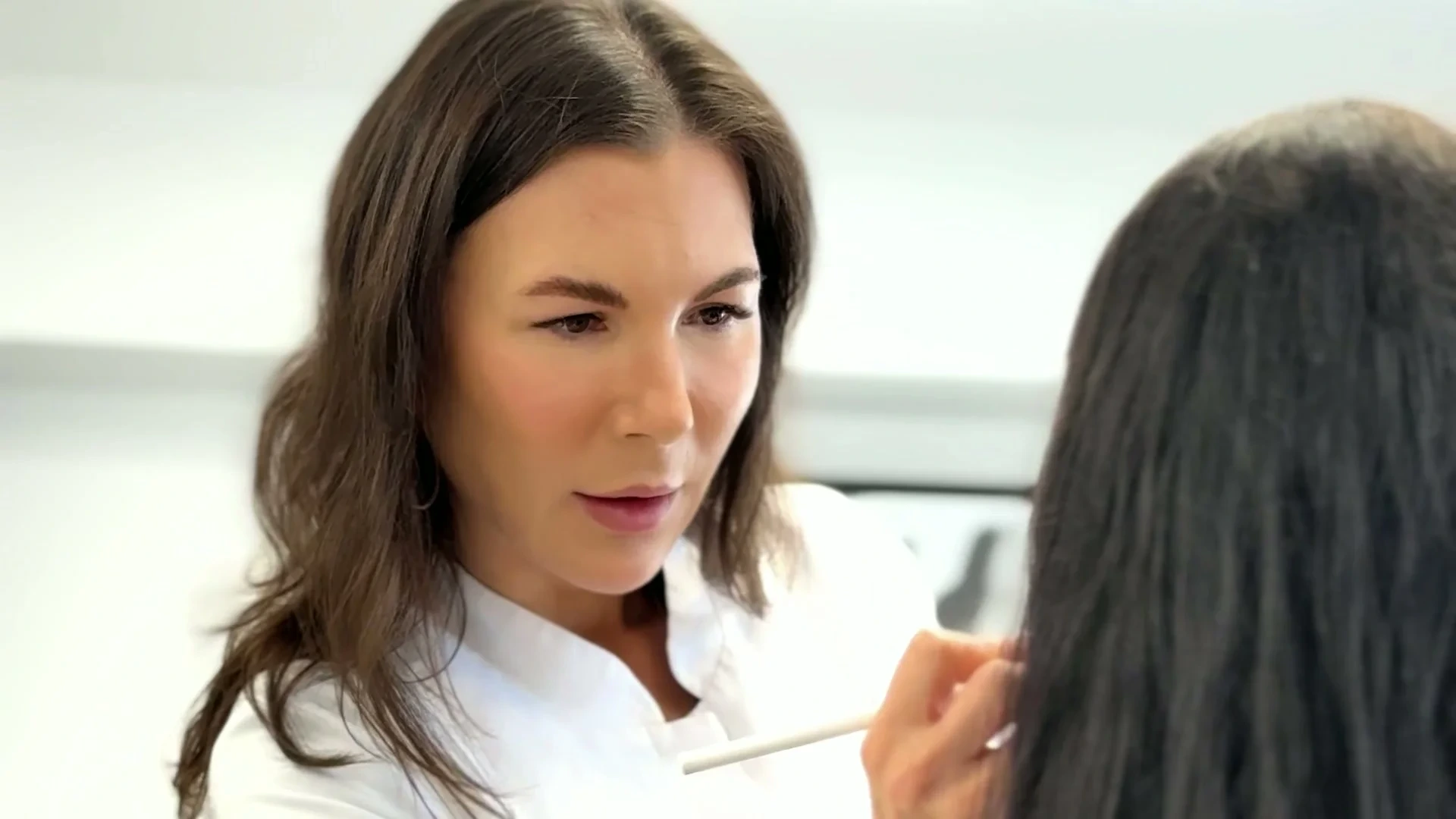
Mole assessment
A new or changing skin lesion deserves evaluation, even if it doesn't hurt.
Show the doctor the change that worries you and tell him how long you have been observing it. Dermatoscopic examination helps assess its features and plan further treatment.
The doctor decides on further steps after the examination. Do not choose the method of removing the lesion based solely on its appearance.
Bring any previous examination reports or photographs of the skin lesion to your appointment. Also tell us about any changes in its appearance.
Lighting and magnification allow the doctor to see features of the lesion that are not visible by ordinary examination of the skin. The examination helps to decide on observation, control or further diagnostics; does not replace histopathological examination when needed.
Dermatoscopy involves examining the skin and does not involve cutting it or removing a mole. The possible procedure is a separate stage.
Not every change is resolved by viewing alone. If the disease is suspected, it may be necessary to collect material for histopathological examination.
At the clinic
Identify the area that worries you and any changes in size, color, shape or symptoms. Show previous descriptions and photos if you have them.
The doctor assesses the features of the lesions using a dermatoscope. Confirm the scope of the examination when booking, especially if you want to check a larger number of moles.
You discuss whether observation is enough, when follow-up is needed, and whether the lesion should be referred for further diagnosis.
Preparation
Save the location of your changes so you don't miss any. Also report spontaneous bleeding, itching, or rapid growth.
Dermatoscopy descriptions, results of removed lesions and previous photographs are useful. Also include your family or personal diagnoses of skin cancer.
Avoid makeup or tinting products on the area being examined. Do not remove or irritate the lesion before your visit.
Follow-up
Determine which changes to watch and when to return. A one-time examination does not exclude the occurrence of new changes in the future.
Monitor your skin between visits. If a lesion grows, changes color, shape or bleeds spontaneously, report it early.
If your doctor recommends an excision or other examination, determine the next step. Cosmetic removal should not precede proper diagnosis.
Dermatoscopy has its own item in the price list. Consultation and removal of the lesion are priced separately. When booking, specify the scope of the examination.
In our clinic
Confirm the availability of the service and practitioner when booking.
Patient questions
No. The method of treatment is determined by diagnosis. Some changes require different treatment, including histopathological diagnosis.
Viewing with a dermatoscope does not require punctures. If the lesion is painful or irritated, mention it before assessing it.
Confirm scope when making an appointment. Report whether it's a specific lesion, a few spots, or a broader skin review.
Yes. The need for evaluation does not depend solely on whether the lesion is convex. Its features and changes over time are important.
It may help show previous appearance, but is not a substitute for dermatoscopic evaluation and medical examination.
The timing depends on the appearance of the lesions and your risk factors. Your doctor will set it after the examination; the same interval is not appropriate for everyone.
The absence of pain does not determine the nature of the lesion. Show the doctor the new, changing, or other area of concern.
Just looking at the skin does not create a wound. If an additional procedure is performed, you receive recommendations specific to it.
No. Examination with a dermatoscope helps in the assessment, and histopathology examines the collected material. The doctor decides about the need for further diagnostics.
Start with a dermatological evaluation. The method must allow for proper diagnosis; laser or freezing are not suitable for every lesion.
Karola Miarki 13 · Lubliniec
Dermatology
Acne, skin lesions, redness or hair loss? A visit to Tatiana Jasińska, M.D. allows you to determine where to start.
Doctor's visitTalk about what you want to change, assessment of the skin and facial proportions, and discussion of possible methods with Tatiana Jasińska, MD.
Doctor's visit